01 — The Spark
A fragmented problem, hiding in plain sight.
Singapore has no shortage of grocery promotions — supermarkets, wet markets, and provision shops all run deals constantly. The problem is that this information is fragmented and impossible to compare. Every store has its own format, its own flyer, its own app. There's no single place where a shopper can ask: "where's the cheapest eggs this week?"
The question that started HKT: what if anyone could contribute deal information just by snapping a photo — and everyone else could benefit from it?
Who it's for
The Deal Hunter 🛒
Grocery shoppers who want to find the best price without doing the legwork themselves.
Who it's for
The Lobang Sharer 📲
People who already snap and share promos naturally. They just needed somewhere useful to send it.
02 — The Dig
The existing tools got the UX wrong.
Before building, we spoke to 30–50 grocery shoppers — housewives and aunties who actively hunt for deals.
The key finding: existing apps that aggregate grocery prices require users to manually type in product details for every entry — brand, weight, price, store, validity date. That friction kills contribution. Nobody wants to do data entry for a can of sardines.
But these same people were already snapping photos of price tags and sharing them on WhatsApp and social media — effortlessly, habitually, every day.
The behaviour already existed. The existing tools just got the UX wrong. HKT was built around the photo, not the form.
03 — The Build
Find Deals, Share Lobang. Don't be Cai Tao.
Snap a deal photo → bot reads it → deal gets saved → anyone can search for it.
The bot lives in Telegram, where Singaporeans already are. No app to download. No account to create. Two actions: share a deal, or search for one.
Live Demo
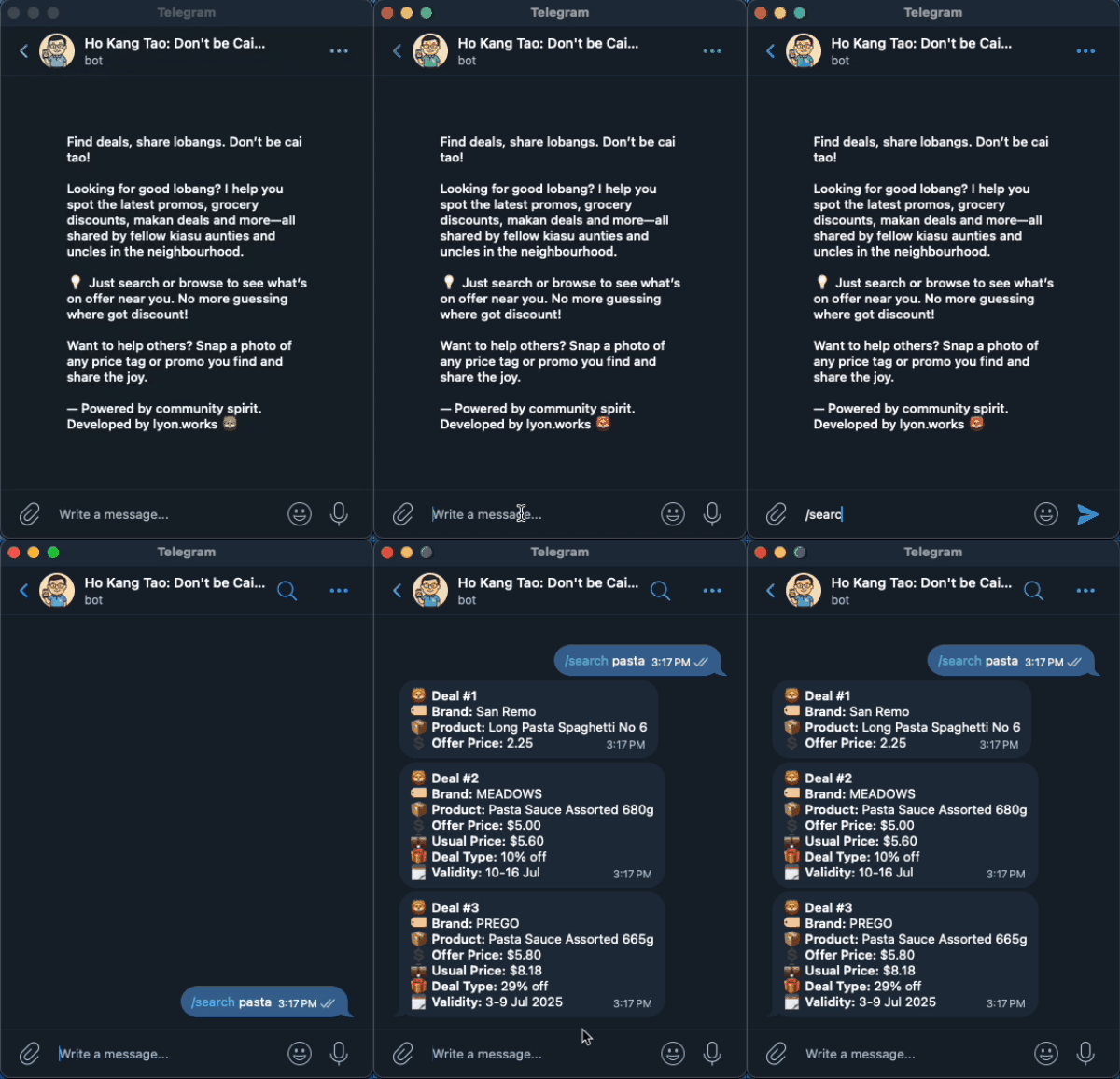
Search any product — get the latest deals back.
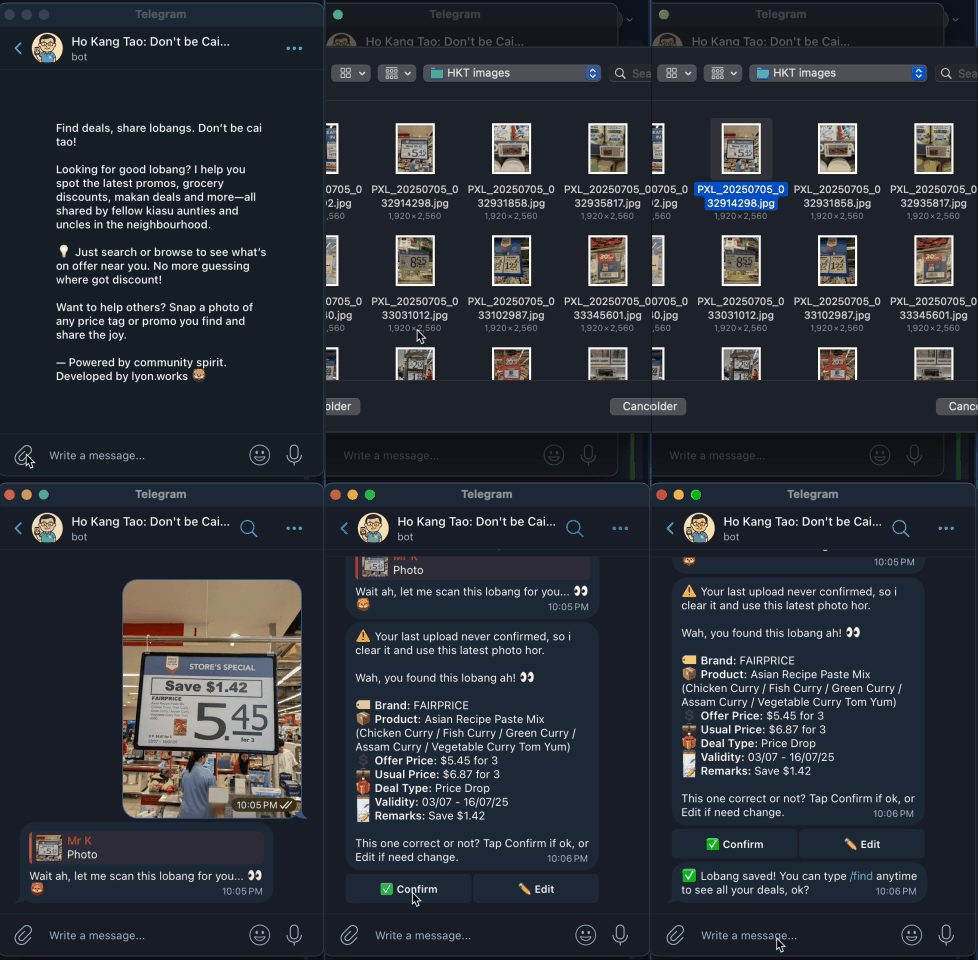
Share a deal photo — bot reads and saves it.
04 — Under the Hood
From messy photo to structured data — in seconds.
The core challenge was bridging offline to digital — turning a real-world photo into clean, structured, searchable data. The pipeline does this in layers.
How it flows
OCR — Reading the Mess
Google Vision API extracts raw text from whatever image comes in — cluttered flyer, blurry price tag, handwritten signboard. It doesn't need a clean input. That raw text then gets passed to the AI layer.
AI Parsing — Making Sense of It
GPT-4o takes the messy OCR output and structures it into clean fields: product name, price, promo type, store, and validity dates. This is where most of the intelligence lives — turning noise into something useful.
User Correction — The Learning Loop
Before anything gets saved, the bot shows the user what it extracted and asks: "Is this correct?" Users can fix mistakes on the spot. This keeps data quality high — and gives the system a feedback loop to improve over time.
05 — What I Learned
The tech worked. The constraint was scale, not execution.
HKT solved the problem it set out to solve. The OCR pipeline read real-world images reliably. The user correction loop kept data quality high. People used it, contributed deals, and found value in it.
What we couldn't solve — at least not as a solo side project — was distribution and sustainability. Growing a community-driven platform requires connections, partnerships, and capital that a one-lion studio running on curiosity doesn't have. Without a critical mass of contributors, the dataset couldn't compound the way it needed to. We didn't stop because it failed. We chose to graduate it into a prototype — and keep building forward.
✓ What Worked
The photo-first UX was the right call — people contributed because it felt like sharing, not data entry. The OCR + AI pipeline handled real-world messiness well. The user correction loop kept data quality honest. The core idea was validated.
↯ The Constraint
Scaling a community-driven platform needs distribution, partnerships, and capital. As a solo builder with a day job, those weren't available. Without enough contributors, the dataset couldn't reach the critical mass needed to make it truly useful at scale.
Ho Kang Tao stays live. But it graduates here — from "product we maintain" to Prototype #001: the build that started everything.